Health & Safety Policy — Commercial Waste Hounslow
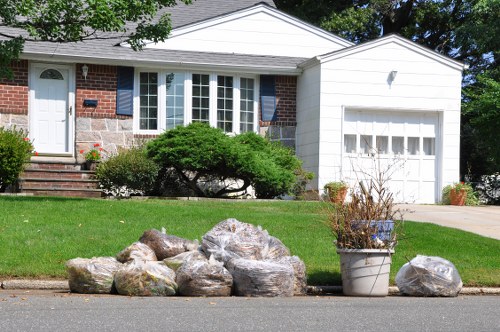 This Health and Safety Policy sets out the commitments and practical controls for our commercial waste operations. It applies to all staff, contractors and visitors engaged in commercial waste services, rubbish collection and waste handling within the defined rubbish company service area. The aim is to protect people, property and the environment by ensuring that activities are carried out safely and in accordance with current good practice. Safety is a core value that underpins every service we provide.
Managers and supervisors have a duty to lead by example and provide appropriate resources to manage risk. Employees must take reasonable care of their own health and safety and cooperate with safe systems of work. Accountability is defined at all levels: strategic, operational and on-the-ground teams. Roles and responsibilities are documented, communicated and reviewed to maintain clear lines of authority and oversight across our waste management services.
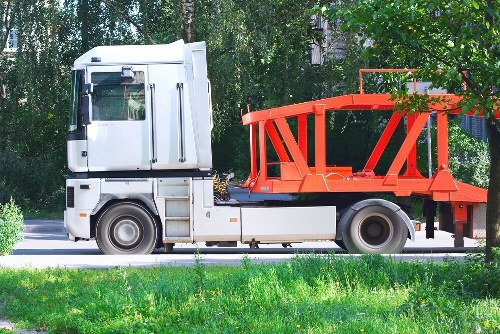 We maintain a programme of risk assessment that identifies hazards associated with commercial waste collection, transfer and disposal activities. Assessments consider manual handling, vehicle movements, sharps and hazardous materials, slips and trips, and interaction with public spaces in the rubbish collection area. Control measures follow the hierarchy of risk control: elimination, substitution, engineering, administrative controls and personal protective equipment (PPE). These measures are regularly reviewed and updated to reflect changing operations and emerging risks.
Operational Controls and Safe Working Practices
Operational procedures are documented for each service type: scheduled collections, ad hoc clearances, skip placements, and container exchanges. All operatives must use approved pathways, maintain secure traffic management on site where required, and ensure containers are correctly labelled and secured. Segregation of waste streams is enforced to reduce contamination and to protect staff from hazardous exposures during handling and loading.
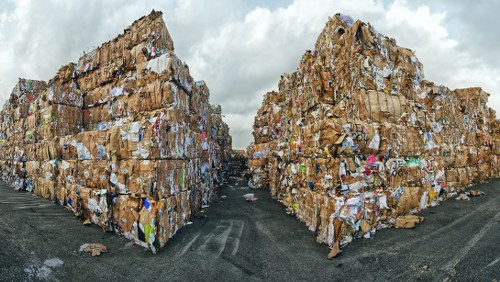 Training and competence are essential. New staff receive induction covering safe systems of work, equipment use and emergency procedures. Regular refresher training, toolbox talks and competency checks ensure ongoing awareness of safe practices in the rubbish company service area. Training records are maintained and used to plan further training where gaps are identified.
Personal protective equipment is supplied and maintained and includes high-visibility clothing, gloves, safety footwear and eye protection where appropriate. Equipment checks are conducted before each shift, and defective items are removed from service. Where mechanical aids or lifting equipment are provided, only authorised and trained personnel may operate them to prevent manual handling injuries.
Vehicles, Contractors and Hazardous Materials
Vehicle safety is managed through daily vehicle inspections, planned maintenance, driver training and route planning to minimise risk exposure. Drivers and crewmembers must adhere to safe loading procedures and ensure loads are secured for transit. Mobile phone use while driving is prohibited and operators follow safe access and egress protocols around depots and customer sites.
 Contractors and sub-contractors engaged to deliver services on our behalf are required to demonstrate equivalent health and safety standards. Written arrangements define responsibilities, communication channels and site-specific risk controls. Contractors must supply evidence of training, insurance and method statements for higher-risk activities, and their performance is monitored against agreed safety criteria.
 Management of hazardous and specialist waste is undertaken by trained personnel using designated containers and documented procedures. Any discovery of unknown or potentially harmful substances prompts immediate isolation, notification to the appointed manager and safe removal following relevant protocols. Spill kits, containment materials and emergency contact lists are available to mitigate environmental and health impacts in the event of contamination.
Incident Reporting, Monitoring and Continuous Improvement
All incidents, near-misses and unsafe conditions must be reported immediately through the internal reporting system. Reports are investigated to identify root causes and to implement corrective actions. Lessons learned feed into training updates, risk assessments and procedural changes. Regular audits and performance reviews track compliance and effectiveness across the entire waste management operation.
Key performance indicators include incident frequency, training completion rates, vehicle inspection compliance and audit findings. Data is analysed to drive continuous improvement and to ensure the rubbish collection service area operates to the highest standards of safety and reliability. Management reviews the Health and Safety Policy periodically to ensure it remains suitable and effective.
By maintaining robust controls, promoting a strong safety culture and investing in competence development, our organisation strives to deliver safe, efficient and responsible commercial waste services. Every person involved is expected to contribute to a healthy and safe working environment so that our operations protect people, property and the community while delivering professional waste management solutions.
